English Harbour · English Harbour
The Admiral’s House and the Dockyard Museum
Ship models, maps and naval artefacts share the rooms of a house built in the 1850s, where the museum follows the history of the naval yard and English Harbour.
- Parish
- St Paul
- From St John's
- 40 minutes
- Reading
- 2 min
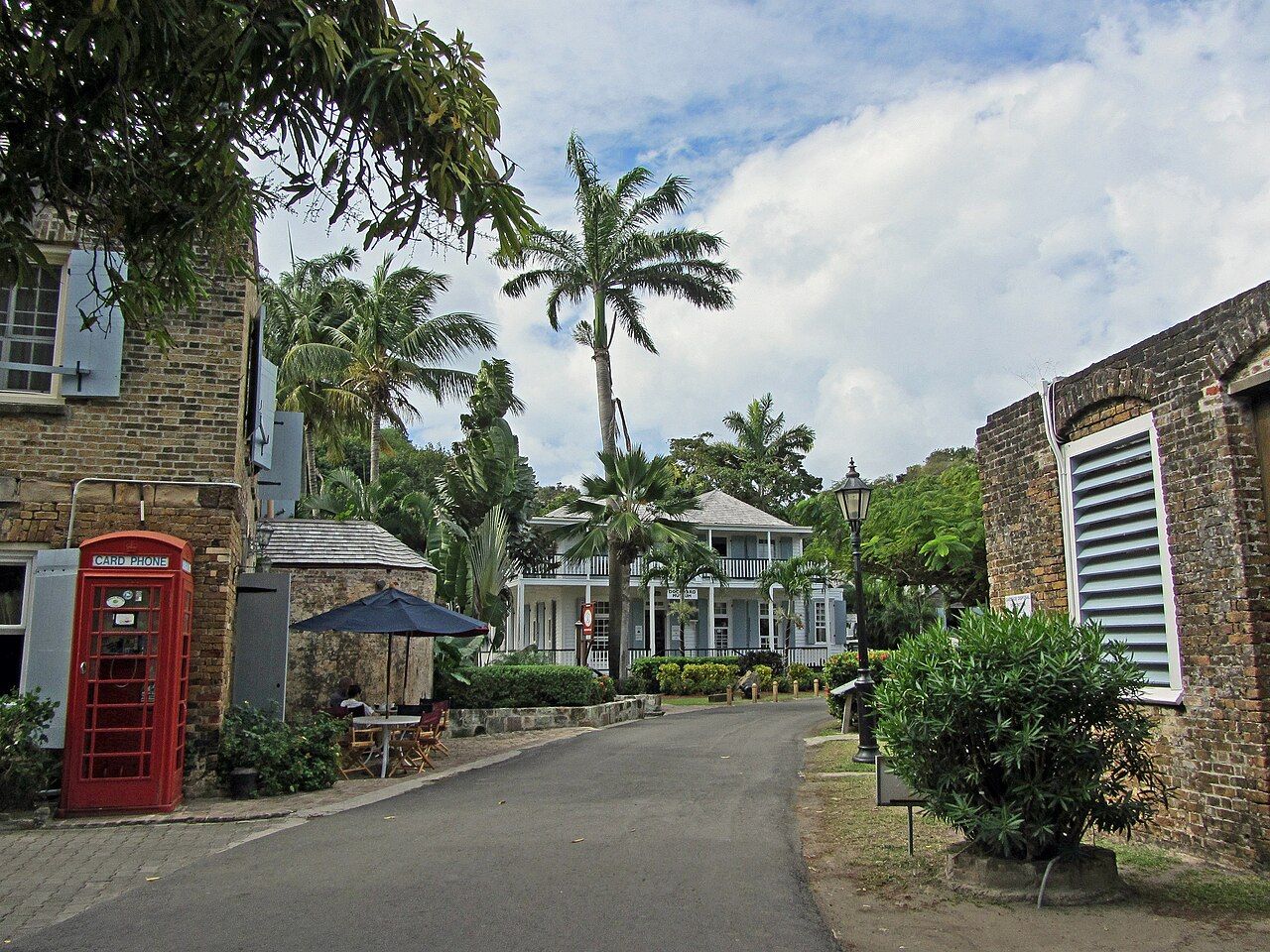
1850s: why is the Dockyard Museum in the Admiral’s House? The house was built in that decade, long after Horatio Nelson had left Antigua. That gap is part of the visit: the building and the person whose time on Antigua has a section in the museum belong to different moments in the story.
What does the building add? The Admiral’s House has a wide veranda looking over the dockyard and the harbor. It’s a view that keeps the museum’s subject right outside: the naval yard, the harbor and the place the exhibits are about, all in one glance (the veranda has a rather good way of bringing the subject into the room).
What’s on display? Ship models, maps and naval artifacts make up some of the collection. They’re objects to pause over, then look back at the museum’s wider story: the history of the naval yard and of English Harbour. No single object has to carry the whole history on its own.
And what does the museum say about Nelson? A section is devoted to Horatio Nelson’s time on Antigua. The house came later, so the two aren’t presented as the same chapter. Instead, the exhibits bring Nelson into a building that belongs to a later period of the story.
Is the subject limited to ships and the naval yard? No; the Dockyard Museum also covers archaeology at sites around English Harbour. The exhibits range from ship models and maps to that archaeology, with the harbor itself still visible from the wide veranda. The wider setting includes the hillside forts above the harbour.
What else belongs in the harbor picture? Clarence House stands on a hill across the harbor. Its name comes from Prince William Henry, Duke of Clarence, later King William IV. It’s another name and building tied to the place, without being part of the Admiral’s House’s timeline.
The numbers: The Admiral’s House was built in the 1850s, long after Nelson had left Antigua. The house got the last word, and it didn’t even have to say a thing.
Photo credits: Anneli Salo: Creative Commons BY-SA 4.0.
