English Harbour · English Harbour
Nelson's Dockyard: a Georgian base still at work
At English Harbour, a deep natural harbor sheltered the Royal Navy’s Leeward Islands fleet. Today, the dockyard’s restored Georgian buildings stand beside yachts and working capstans.
- Parish
- St Paul
- From St John's
- 40 minutes
- Reading
- 4 min
What is this harbor?
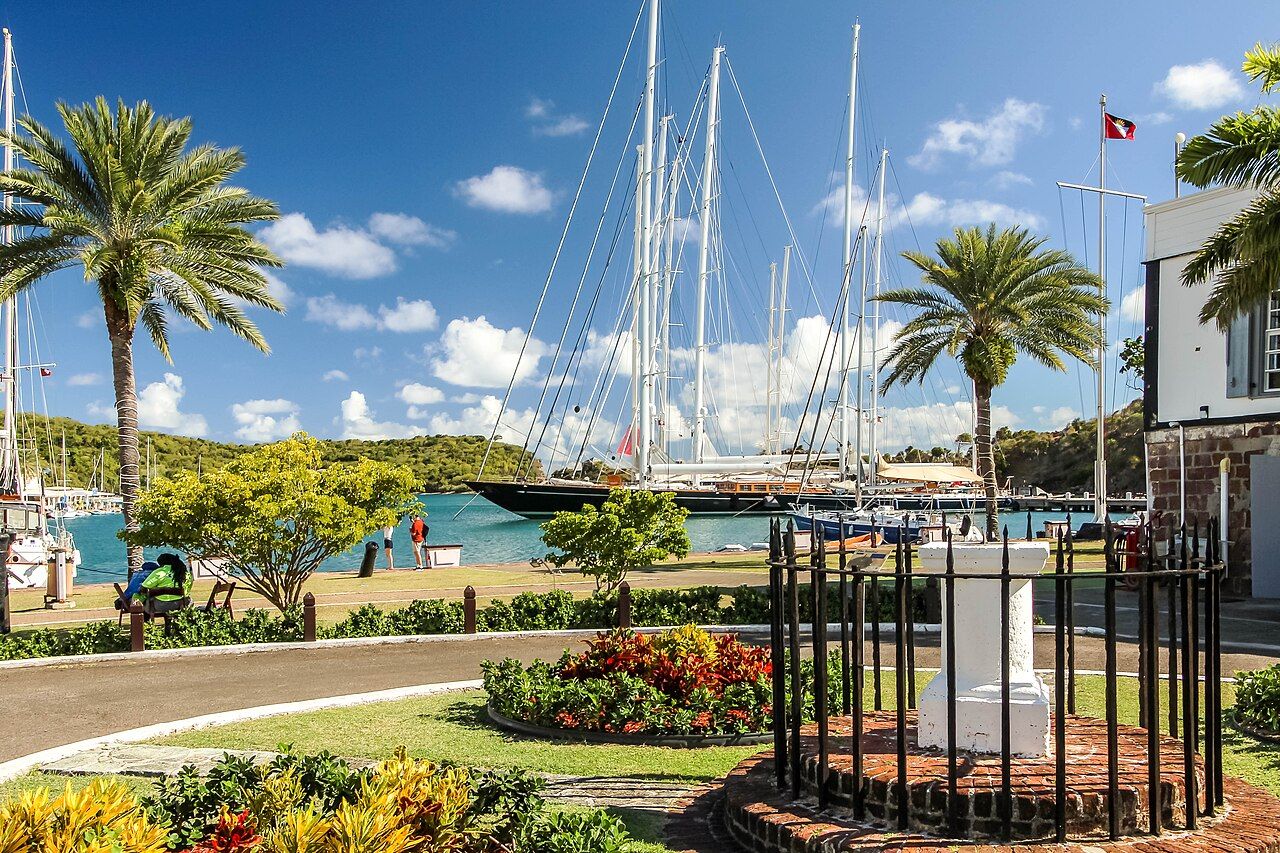
In the 18th century, the Royal Navy developed English Harbour as its main base in the Leeward Islands. The setting explains a lot: English Harbour is deep and almost landlocked, a natural harbor that sheltered ships from hurricanes. Nelson's Dockyard stands here, on Antigua's south coast, where the harbor and the dockyard’s history belong in the same picture. The short version? This was a naval base shaped by its position, and the place is still in use.
What did the harbor offer the fleet? Shelter, in a form that mattered to ships. It wasn’t just a name on a map or a backdrop for the dockyard: English Harbour protected vessels from hurricanes. The Royal Navy made it its main base in the Leeward Islands during the 18th century, and the dockyard grew as part of that working role. [That’s a useful thing to keep in mind as the view shifts from water to buildings.]
Who was Nelson here?
Horatio Nelson served at English Harbour in the 1780s as a young captain of HMS Boreas. That’s the connection behind the dockyard’s name, and it places Nelson here as a serving naval officer, not as a later visitor to a preserved site. The dockyard’s story is broader than one person, of course: it was the Royal Navy’s main base in the Leeward Islands. Still, the name gives that much larger history a human point of entry.
What does the name say about the place now? Nelson's Dockyard is described as the only Georgian dockyard in the world still in use. That sentence holds two ideas together: it’s Georgian, and it hasn’t become only a record of what used to happen here. The Royal Navy closed the dockyard at English Harbour in 1889, but the dockyard itself returned to use in a different era. It’s a place where the old role and the present-day harbor share the same name.
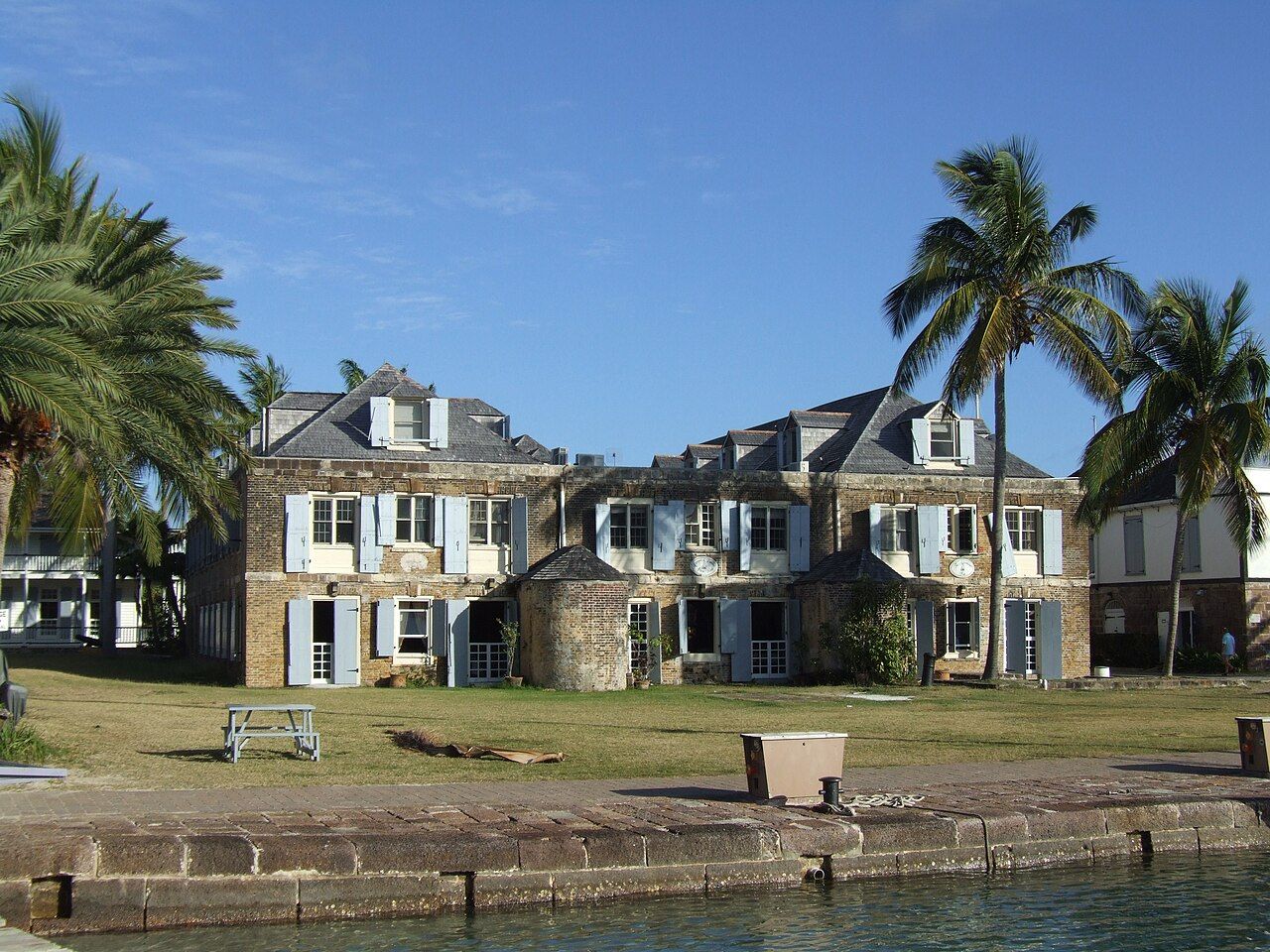
Nelson's Dockyard is described as the only Georgian dockyard in the world still in use.
Nelson's Dockyard is described as the only Georgian dockyard in the world still in use.
What remains?
Look toward the water’s edge and the stone pillars that once held up the boathouse and sail loft are still standing. They’re a spare kind of record (pillars, rather than a full building), but their former uses are part of the dockyard’s working story. What stood here? A boathouse and a sail loft, supported by these stones. The remains make the harbor edge part of the history, not just the place where the history happens.
Which buildings give the dockyard its Georgian character? The Copper and Lumber Store is one of the restored Georgian buildings here. The Friends of English Harbour began restoring the dockyard buildings in the 1950s, and the restored dockyard opened as Nelson's Dockyard in 1961. That sequence matters: restoration wasn’t a vague change of mood, but work that led to the dockyard opening under its present name. For a closer look at the history, there’s the dockyard's small museum.
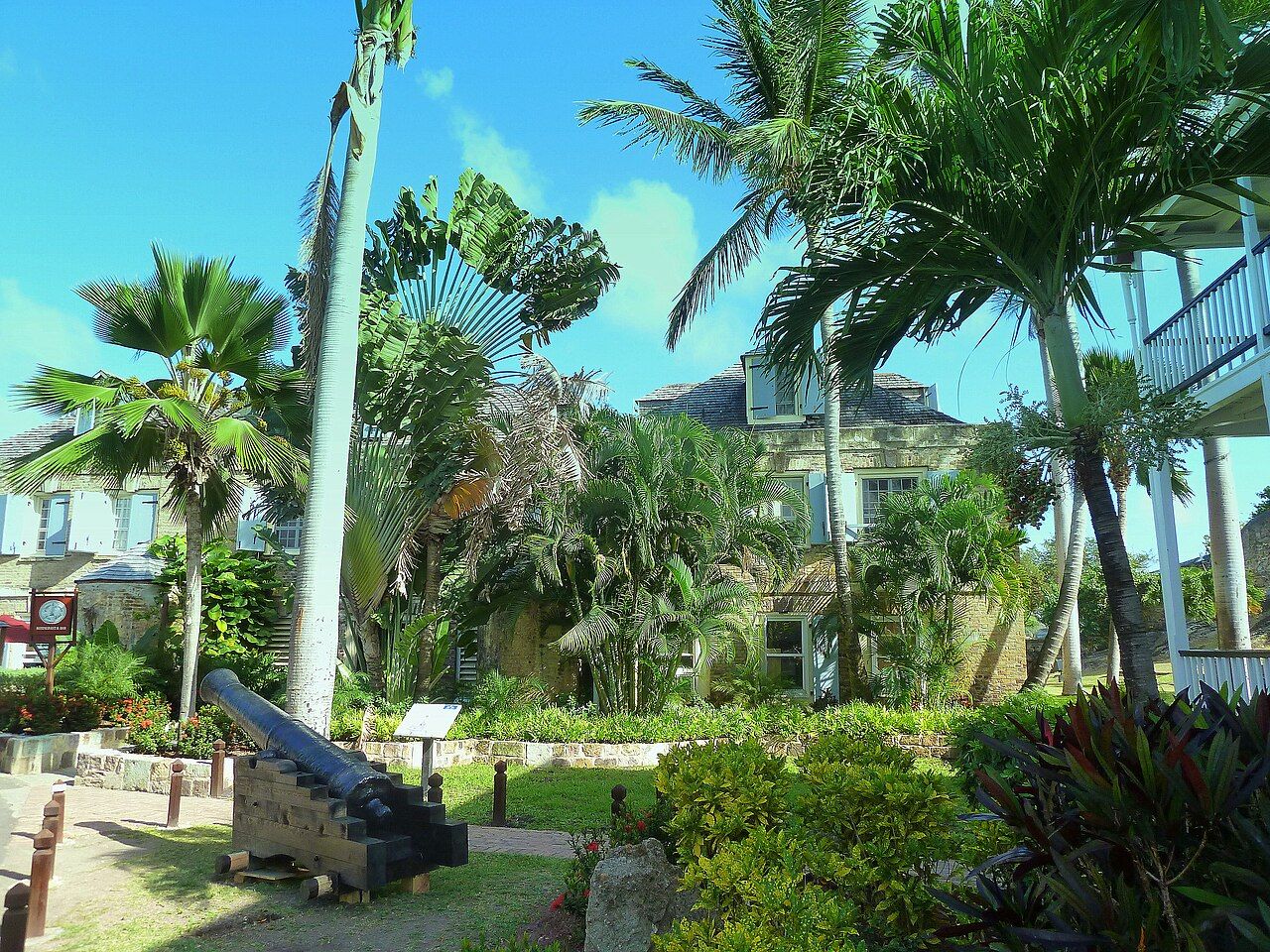
And what about the capstans? They’re still in the dockyard, with a very particular job in its earlier working life. Capstans were used to haul ships over for cleaning, a process called careening. It’s a vivid bit of practical history: ships were hauled over, cleaned, then the capstans stayed as part of the place’s physical record. The word careening is worth keeping; it names the process, while the capstans show the equipment that made it possible.
Why is it a World Heritage Site?
In 2016, UNESCO inscribed the Antigua Naval Dockyard and Related Archaeological Sites on the World Heritage List. What can be taken from that name? It connects the naval dockyard with related archaeological sites, while the dockyard itself gives the story a very visible center: harbor, restored Georgian buildings, surviving pillars and equipment. The inscription is an important part of the place’s present-day story, alongside its time as a Royal Navy base and its restoration.
Is the dockyard separate from the landscape around it? No: Nelson's Dockyard is part of a national park that covers much of the land around English Harbour. So the naval base sits within a larger protected area, and the harbor remains central to the story. A useful way to read the place is in layers: the deep natural harbor, the Royal Navy’s base, the closed dockyard, the restoration, and the site that’s still in use. Each layer answers a different question about what’s here.
What stays with the story? A Georgian dockyard that didn’t stop being used, stone pillars at the water’s edge, and capstans once put to work hauling ships for careening. The Royal Navy closed the base in 1889; restoration began in the 1950s; the dockyard opened as Nelson's Dockyard in 1961; UNESCO inscribed the site in 2016. That’s a lot of history for one harbor to hold. And the capstans? They’ve certainly had a long haul.
The numbers: 18th century; 1780s; 1889; 1950s; 1961; 2016. The capstans did the hauling, so they’ve earned a rest from the arithmetic.
Photo credits: Dr. Thomas Liptak: Creative Commons BY 4.0; Kognos: Creative Commons BY-SA 4.0; giggel: Creative Commons BY 3.0.


