Antigua Before Columbus: The First Peoples
From Archaic fishers to Arawak-speaking farmers, archaeology traces thousands of years of life on Antigua before Europeans arrived.
- Reading
- 4 min
Morning: The Archaic Age
What can a shell tell? Not a whole story, of course—but it’s a good place to begin. The first people lived on Antigua several thousand years ago, in the period archaeologists call the Archaic Age. Picture no grand origin tale here, just the things the evidence points to: fishing, gathering shellfish, and making tools from stone and shell. The island’s first history is a story of work, food, and things made by hand.
How far back does that take us? Several thousand years, though that’s as precise as the facts get. The Jolly Beach site on Antigua is one of the oldest known Archaic sites in the Leeward Islands. It gives this early chapter a place on the map, even if the details we have are spare. We can say what people did—fished, gathered shellfish, made tools.
So what does “Archaic” mean here? It’s the name archaeologists use for that early period, not a label that tells us everything about the people who lived through it. Stone and shell tools, fishing and shellfish gathering: those are the details in hand. A simple list, perhaps, but it’s already a picture of people using what the island and its waters offered (and making useful things from it).
The island’s first history is a story of work, food, and things made by hand.
When the sun stands overhead
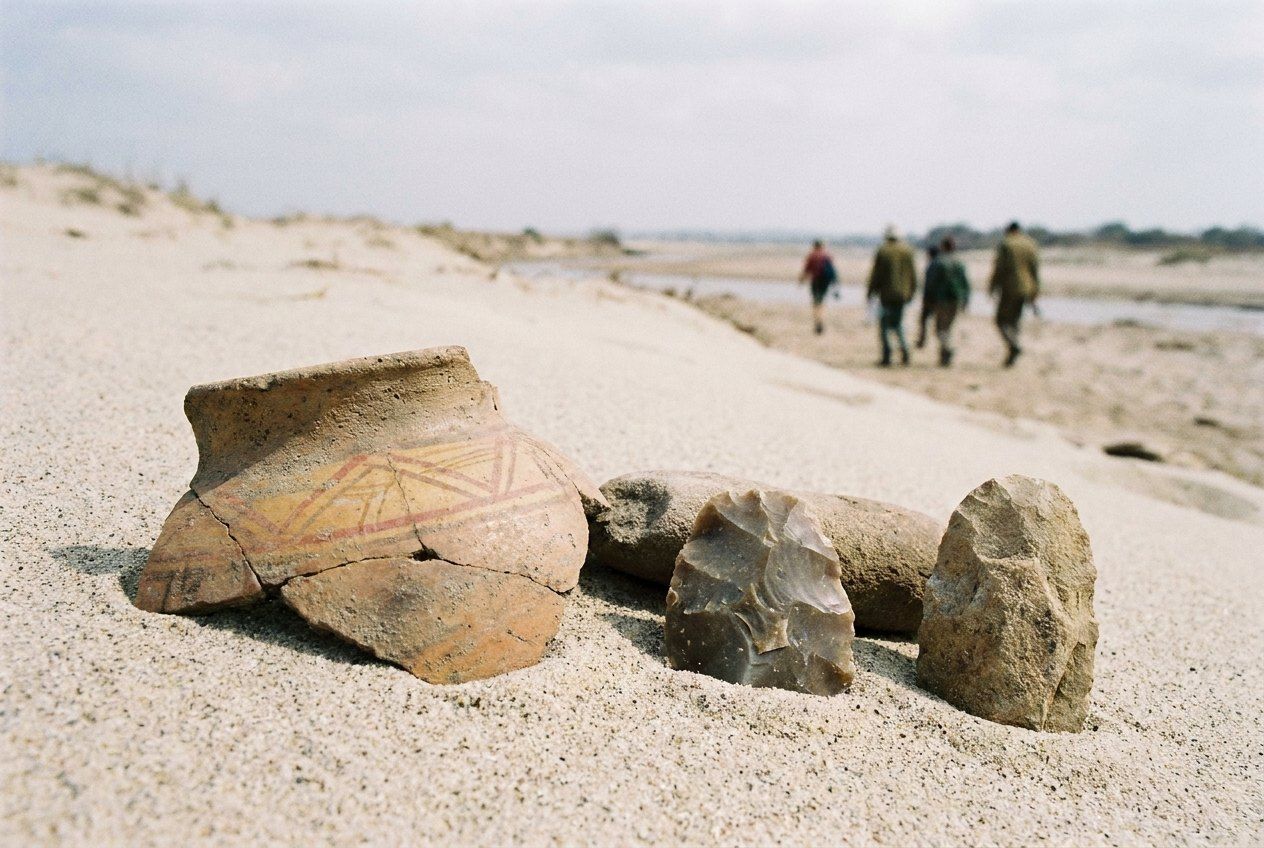
What changes in the next chapter? Arawak-speaking farmers and potters arrived on Antigua from South America around 2,000 years ago. They brought cassava farming and pottery with them. That’s a different way of understanding the island’s past: not only fishing and gathering, but also growing cassava and making pottery. The shift is clear in the facts, even if they don’t give us a scene-by-scene account of how it unfolded.
Where does archaeology place that chapter? Mill Reef, in the east of Antigua, is an important Amerindian archaeological site. The name is a useful anchor as we move through the story; it isn’t a reason to imagine details the evidence here doesn’t supply. What we can say is that the site matters to the record of Amerindian life on the island. The farmers and potters belong to a much later chapter than the Archaic people, and the two shouldn’t be blurred together just because both stories begin on the same island.
And what about the stone tools? Antigua’s flint at Long Island was used to make stone tools traded around the region. That single fact opens the view beyond the island: flint from Antigua had a use beyond its starting point. There’s no need to invent a route, a market, or a trader to see the point. A material, a tool, an exchange around the region—that’s enough to make the island feel connected to a wider world.
Is there a name from this earlier history that still gets repeated? Wadadli is often given as the indigenous name for Antigua. “Often given” is the careful wording, and worth keeping. It lets the name sit in the story without pretending that the facts here explain every part of its history. Wadadli belongs alongside the archaeological record, not in place of it.
Late afternoon
Can an everyday crop carry an old story? The black pineapple grown on Antigua is thought to have been brought by the first peoples. The wording matters again: thought to have been. It’s a link between a familiar crop and the island’s earliest inhabitants, but the fact is carefully hedged, so the story should be too. No grand flourish required; the possibility is interesting on its own.
Where can the material traces be seen? Many Amerindian artefacts from Antigua are kept at the old Court House museum. That’s a concrete place in a story that can otherwise feel very distant. Artefacts give the past a physical presence, though this account doesn’t name particular objects or say what each one shows. The broad outline remains the same: people made tools, worked with pottery, farmed cassava, and used the island’s resources.
Were there permanent settlements when Europeans arrived? There were few or no permanent Amerindian settlements on Antigua at that point. That fact doesn’t erase the thousands of years before it. It marks one moment in a much longer story, after the Archaic people and after the arrival of Arawak-speaking farmers and potters. “Few or no” is not the same as a full account of who was present or what their lives were like, so it’s best not to make the sentence say more than it does.
What’s the simplest way to hold all these chapters together? Start with the Archaic people: fish, shellfish, stone and shell tools. Move on to Arawak-speaking farmers and potters from South America, bringing cassava farming and pottery. Add Mill Reef, Long Island flint, Wadadli, and the black pineapple’s possible connection to the first peoples. The sequence is modest, but it spans a great deal of time. Archaeology gives us the things we can say; where it leaves a gap, the gap can stay a gap (which is less dramatic than a legend, but tidier).
The numbers: several thousand years of human life; around 2,000 years since Arawak-speaking farmers and potters arrived. Even the calendar needs a long lunch.