Hikes, Reefs & Barbuda · Devil's Bridge
Devil’s Bridge: What the Atlantic Carved
A natural limestone arch at Indian Town Point, where Atlantic waves meet the rock and blowholes send spray high into the air.
- Parish
- St Philip
- From St John's
- 40 minutes
- Reading
- 2 min
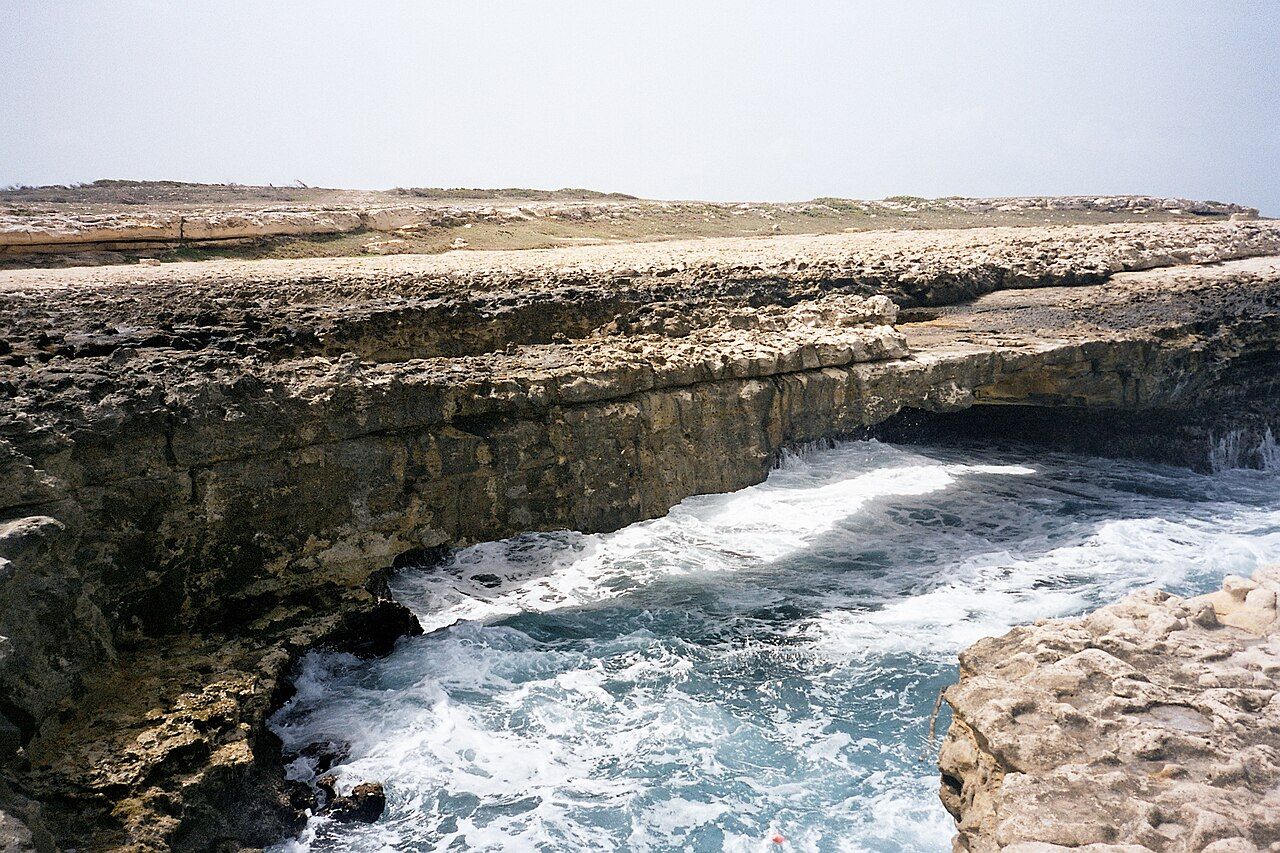
One natural limestone arch stands at Devil’s Bridge, on Antigua’s east coast, where the Atlantic has done the carving. The scene’s simple enough to describe: waves wearing away rock, and spray bursting high from blowholes nearby. The details are less gentle than the word “arch” might suggest (the rocks can be sharp and slippery when wet).
Is Devil’s Bridge a bridge built by people? No. It’s a natural arch, shaped as Atlantic waves wore away the limestone. It sits at Indian Town Point, one of the most easterly points of Antigua, and the place is part of a national park in the parish of St Philip. So the name may sound like an invitation to cross, but the rock itself is the story.
Are the blowholes just openings in the rock? They’re openings that send spray high into the air when big waves come in. That’s the striking part of the place: the sea doesn’t only meet the edge of the land; it finds its way through the rock, then throws water upward. The the calm lagoon nearby makes a useful contrast in the landscape, though here the Atlantic is the main character.
Is the sea here usually quiet? Strong trade winds and Atlantic swell hit Devil’s Bridge for much of the year. Big waves bring spray through the blowholes, while the limestone around them keeps taking the force of the water.
Is the ground around the arch bare rock? The flat limestone is covered in low, salt-tolerant plants. They make a low edge around a place shaped by wind and water, and the contrast is easy to miss if all attention goes to the spray. It’s worth noticing both: the force of the Atlantic and the small, tough growth on the rock.
Does the place make sense as a quick question-and-answer? More or less: a natural arch, waves that carved it, blowholes that send spray high when big waves arrive, and rocks that get slippery when wet. The sea keeps making the explanation visible, though not necessarily in the same burst each time. What will the next wave show?
The numbers: one natural arch; the east coast; St Philip.
Photo credits: Z_dead from London, UK: Creative Commons BY 2.0.
