Benna, Calypso and Steel Pan: Antigua’s Music
Benna’s local storytelling meets calypso, soca and steel pan in a plain-language look at the sounds heard across Antiguan celebrations.
- Reading
- 3 min
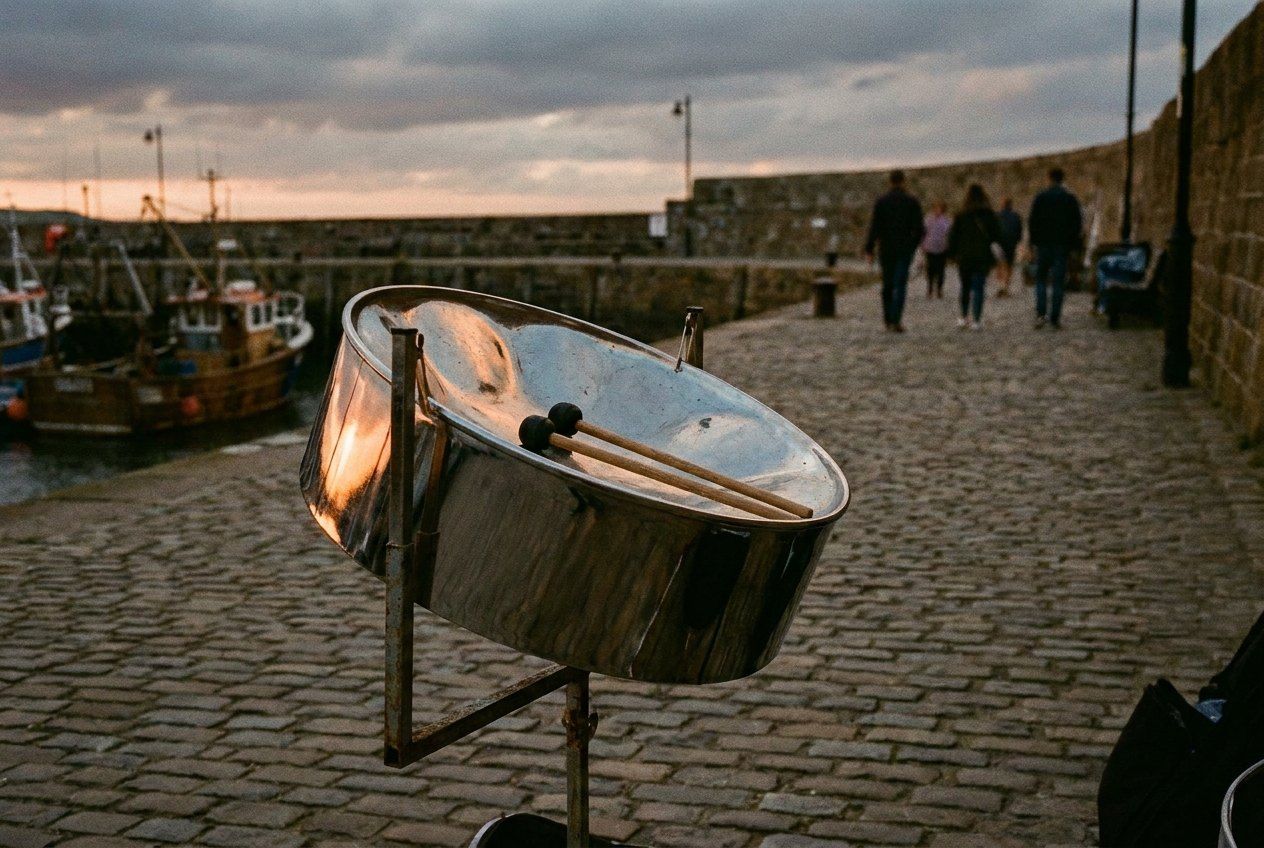
What might a village fair sound like? A steel band is part of the answer. Steel bands play at village fairs across Antigua, as they do at church events and weddings. That’s a small map of where the music lives: not in just one kind of gathering, but across celebrations with different shapes and reasons for coming together.
What’s benna? It’s a traditional Antiguan folk song form, often witty and full of local news and gossip. That’s a clear starting point for the island’s music: songs can carry more than a tune. Benna’s subject matter is close to everyday life, with the humor and news folded right into the form.
Why does that matter to the story of Antigua’s music? Because benna gives the picture a local voice before the story turns to the styles that became closely tied to carnival. Its wit and gossip make a different kind of music history from a list of names and dates; the words themselves are part of what the form is known for.
Where does calypso enter? It arrived in Antigua from Trinidad and became the island’s main carnival music. That’s a plain route and a plain role: a music form came from Trinidad, then took a central place in Antigua’s carnival. Calypso’s history here is also part of the story of the summer carnival.
And where does soca fit? Soca grew out of calypso, but it’s faster dance music, and it dominates modern Antiguan carnival. So the carnival sound has changed in pace, while the connection between the two forms remains easy to follow: soca grew from calypso, then became the dominant music of the modern celebration.
What’s a steel pan made from? Oil drums, hammered and tuned to play notes. The steel pan was invented in Trinidad and spread to Antigua in the 1940s. Put those details together and the instrument’s history is quite literal: oil drums become instruments through hammering and tuning, then the steel pan’s reach extends from Trinidad to Antigua.
How long has steel-band music been part of the region’s story? Antigua has some of the oldest steel orchestras in the Caribbean outside Trinidad. There’s also a different kind of metal in the celebration: iron bands, playing on brake drums and metal parts, are part of J’ouvert on Antigua. Steel pan and iron bands belong to related, but distinct, pieces of the musical picture.
What happens in calypso beyond the music itself? Calypsonians compete each year for the title of Calypso Monarch on Antigua. That contest gives calypso a place in the island’s carnival tradition beyond its role as music: there’s a title to compete for, and the competition happens each year.
Where can steel bands be heard across Antigua? At church events, weddings and village fairs. The list is simple, and it’s worth keeping beside the carnival story: steel bands aren’t only part of one event or one setting. They play across different kinds of celebrations, while iron bands have their place in J’ouvert.
So what holds these sounds together? Not one single style, but a set of threads: benna’s witty local news and gossip, calypso’s place in carnival, soca’s faster dance music, and steel bands playing across the island’s celebrations. The steel pan spread to Antigua in the 1940s—but what might the next song carry?
The numbers: the steel pan spread to Antigua in the 1940s.